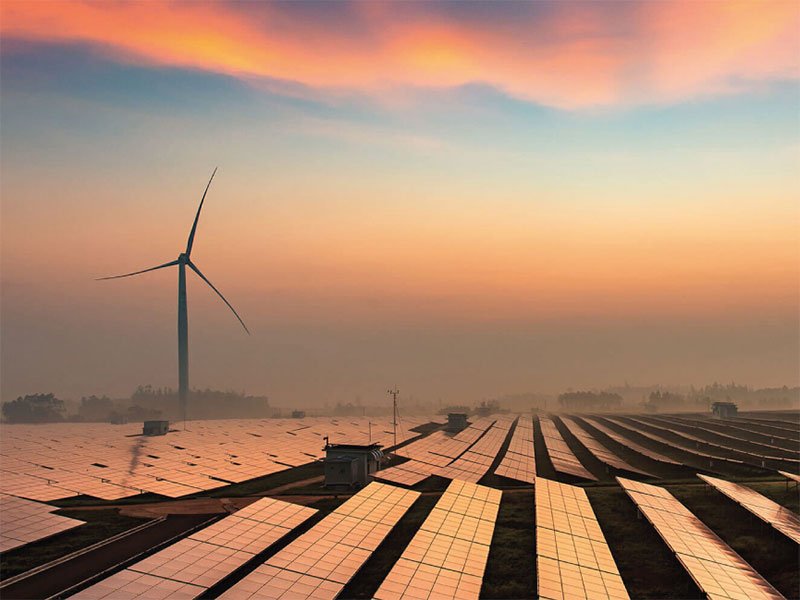
The modern world, characterized by development and progress.

Ideas forged by those who came before us, the lives of our ancestors, who with their effort and spirit gave us what we have now—to them we owe our existence. It is the existence of humankind—the whole, or rather, the single, modern, thinking human being, walking upon the face of the earth, a child of evolution—that has challenged the positions, categories, and values ​​we use today to try to understand our world and our actions within it.
Contact us
Sacrificing the Planet for Capital

Moral reflection on the environment and the ecological problem thus involves questioning all contemporary cultural values ​​regarding technology and its purpose, as well as investments in high-energy technologies, the underlying reasons for resource consumption, and the tendency to use economic indices—and only crude economic ones—as reliable parameters for measuring quality of life.

Professor Nicolas Sosa, a pioneer of ecological ethics, understands Ecology not only as a specific branch of Biology, but as a globalizing, interdisciplinary science encompassing the physical and natural sciences and the social sciences or humanities, capable of addressing urgent problems for human interests themselves, given humanity’s great capacity to transform the environment.

Contact us
An Ecological Civilization is as utopian as a society of good men or a society based on solidarity.

Perhaps that’s why an ecological proposal cannot consist solely of a program; it will only be something that transcends being. It is more important to question the trends that have characterized the historical development of our technology and our society: the extreme specialization of machines and labor, the concentration of people and resources in agglomerations and gigantic industrial enterprises, statism and bureaucratization, the separation between the countryside and the city, and the transformation of nature and human beings into objects.

This instrumental and mechanistic perspective assumes that Nature is a passive habitat composed of objects such as animals, plants, and minerals, which must be managed for human use. In this way, it becomes a kind of engineering that allows us to continue plundering the natural environment and its resources.

Contact us

Today, more than ever, the scientific community has a kind of ethical commitment, precisely because of the privileged place it occupies in the social structure. This commitment is essential to collaborate in clarifying, directing, and controlling the research process itself, in accordance with the aims of science, considering the dependence of scientific activity on political and economic powers and the reciprocal influence of science on these powers.

Discussing quality of life is not simply an economic issue; it encompasses the total human environment, an environment that transcends the physical and biological aspects of animals, including a complex sociocultural dynamic developed throughout the process of humanization.

According to Professor Dr. María Rovaletti, the environment is the sphere where the social structure is produced and transformed into a specific form of relationship with nature. The Industrial Revolution has brought with it the denial of nature through the predatory use of natural resources. According to mechanistic logic, resources are important only in terms of production costs, since their use value or their possibility of substitution is not discussed.

Contact us
The Development Model, viewed as mere economic expansion, increasing production, and accelerated consumption of resources, can no longer be accepted.

There is no correlation whatsoever between increased GDP and improved Quality of Life. This indicator does not reflect the effects of the exploitation and depletion of natural resources and environmental pollution.

Paul Samuelson defined Net Economic Welfare (NEW) as an adjustment to the concept of GDP, subtracting the negative factors of development, such as marginalization, pollution, insecurity, and stress.

The concept of Quality of Life is an index comprised of numerous relative factors that measure work, health, communication, recreation, education, industry, agriculture, services, social security, food, and where we live. The World Health Organization defines health as a state of physical, mental and social well-being and not merely the absence of disease or infirmity, where the focus is on health promotion and not on the cure of disease.

Contact us